-
Cannabis 101 -
Welcome to Cannabis 101 a quick
course on different types of
Cannabis and how to use them
sensibly.
Sensible
Cannabis Use
Reprinted from
the
Cannabis Action Network.
Like any
medicine, cannabis can be misused.
Excessive or inappropriate use can
contribute to problems including
sleepiness, overeating, and time
management issues. Due to the
political climate surrounding
cannabis use research, clinical
studies have produced widely
conflicting conclusions about the
true benefits and potential side
effects of cannabis use. Always
listen to the advice of your doctor
and use good judgment when using
medical cannabis. These guidelines
help identify ways of using medical
cannabis in a positive way.
- Adults
should use cannabis as part of a
healthy, balanced, and
responsible lifestyle.
- The
decision to use cannabis should
be made freely, and not as a
result of social pressure.
-
Cannabis users should be well
informed about its effects on
themselves and others. These
effects include both legal and
health risks and personal
consequences.
- Never
use cannabis as an excuse for
antisocial or irresponsible
behavior.
-
Cannabis users should model and
reward responsible use,
particularly with new users.
- Develop
sensible cannabis use limits for
your self based on personal,
health, situational, and
cultural factors. It is
important to be objective about
your personal cannabis use and
listen to the constructive
advice of others.
- Avoid
cannabis use that puts you or
others at risk, such as when
driving, at work, or in public
places. Remember, personal use
of cannabis is still illegal
under federal law, and penalties
are stiff.
- Use of
cannabis by children is
inappropriate and should be
discouraged.
-
Cannabis use should contribute
to, rather than detract from, a
patient's health, well-being,
creativity, work, relationships,
and social obligations.
Methods of
Consumption
Medical
Cannabis can be ingested in many
different ways. Effects may vary
slightly with different methods of
consumption. The length of time it
takes for the medicine to take
effect, and the length of time that
the medicine remains effective, can
vary greatly with different methods
of consumption.
Smoking Cannabis
The most common ingestion method has
traditionally been to smoke the
dried flowers and/or leaves of the
cannabis plant. Dried cannabis can
be smoked in a pipe, rolled into a
cigarette (or ‘joint’), or smoked
using a water pipe (commonly called
a ‘bong’). Water pipes were once
thought to filter out some of the
carcinogens in cannabis smoke, but
studies suggest that there is no
significant health benefit to
smoking from a water pipe over other
smoking methods. Regularly smoking
any plant material can have a
negative impact on pulmonary health,
and therefore Peace in Medicine
recommends patients use vaporizers
or edible forms of medicine whenever
possible.
Vaporizing Cannabis
A vaporizer is a device that allows
the patient to separate the
cannabinoids (the therapeutically
effective chemicals in cannabis)
from the plant material without
burning. This is possible because
cannabinoids vaporize (turn to a
gaseous form that can be inhaled) at
a temperature lower than that
required for burning. As a result,
the patient can inhale without
taking in the burned plant material
that constitutes “smoke”. While
scientific studies are lacking, it
is commonly believed that vaporizing
is a healthier form of ingestion
than smoking cannabis. Vaporizing is
believed to mitigate many if not all
of the negative effects of smoking.
It tastes better as well. If you are
used to smoking your medicine, you
may think that you aren’t “getting
anything” at first when you
vaporize, because vapor does not
burn the throat. Even though the
vapor doesn’t burn, it is still
quite effective. Use caution and
wait a few minutes to feel the full
effects before taking more.
Edible Cannabis
Edibles are foods cooked with butter
or oil that has been infused with
cannabis. Edible cannabis usually
takes longer to take effect (20
minutes to an hour or more) and the
effects generally last longer than
smoking or vaporizing. Edibles taken
on an empty stomach will take effect
significantly faster than if taken
immediately following a meal. It is
difficult to know how strong an
edible medicine will be, and because
it can take an hour or more to feel
the full effects, it is easy to
over-medicate. Use caution! If you
have taken your medicine in an
edible form, wait at least an hour
to be sure you know how strongly it
will affect you before taking more.
Edible Treats
Any food that contains butter or oil
can be made with cannabis-infused
butter or oil, but the most common
edibles are cookies, brownies,
cakes, or candies.
Oils
and Honeys
Cannabis infused oils can be used
directly in foods, consumed in
capsules, or mixed with honey to be
used in tea or on other foods.
Tinctures
A tincture is a concentrated form of
cannabis in an alcohol solution.
Tinctures can be taken under the
tongue or mixed into water or other
beverages.
Types of
Cannabis Medicine
Cannabis Flowers and Leaves
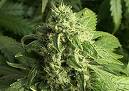
Commonly referred to as ‘buds’, the
flowers of the cannabis plant are
the most potent for medicinal
properties. The leaves of the
cannabis plant also contain some
cannabinoids, but in much lower
concentration. The flowers and
leaves of the plant can be smoked,
vaporized, or used to prepare
edibles.
Hash
Hash or Hashish is manufactured by
separating the trichomes from the
cannabis flowers, to create a
concentrated dose of this specific
part of the cannabis plant. (The
trichomes are the reddish ‘hairs’
that you see on dried cannabis
flowers.) The trichomes are then
processed into a relatively solid
paste or block. Hash can be somewhat
powdery or more solid and sticky,
depending on exactly how it was
processed.
Kief
Kief is also made from the trichome
part of the cannabis flower. Kief is
just the dried trichomes, without
any further processing. It comes as
a dry powder. It can be smoked or
vaporized or used to make edibles.
It is often sprinkled on the top of
cannabis before smoking or
vaporizing, to augment the trichome
content in the flowers. Some
grinders (used to evenly cut up the
cannabis flowers before vaporizing
or smoking) have a small-mesh screen
at the bottom for the purpose of
collecting kief over time.
Sativa vs.
Indica
Cannabis is
the botanical name of a genus of
annual flowering plants in the
Cannabaceae family. There are over
150 species and 10 genera included
in the Cannabaceae family. Besides
cannabis, the hop plant (often used
in the production of beer) is also
part of the Cannabaceae family.
Some species
of cannabis (indica and sativa)
produce fairly large amounts of a
chemical known as
Tetrahydrocannabinol (a cannabinoid
commonly called THC). Cannabis
plants that are grown for their THC
content are referred to as marijuana
plants. Plants in the cannabis genus
are commonly referred to as hemp
plants, but the term hemp is more
appropriately used to describe
cannabis plants that are cultivated
for commercial purposes (like
clothing, fuel, etcetera) rather
than THC content.
Medical
cannabis comes in two basic types:
sativa and indica. Each type has its
own distinct set of characteristics.
Medical cannabis types are available
from pure sativa strains to pure
indica strains, and include every
combination in between.
Cannabis Sativa
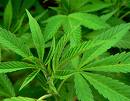
Cannabis Sativa is a tall, slower
growing and maturing plant that
typically has long thin leaves which
may vary in color from light green
to darker greens. Sativa buds are
long and thin and turn red as they
mature in a warm environment. In
cooler environments the buds may be
slightly purple. Sativa plants smell
sweet and fruity and the smoke is
generally quite mild. It is a source
of fiber for rope and other
products.
The cannabis
sativa medicating effect is often
characterized as uplifting and
energetic. The effects of a cannabis
sativa are mostly cerebral. They
give a feeling of optimism and
well-being, as well as providing a
good measure of pain relief for
certain symptoms. A few pure sativas
are also very high in THC content.
They are known to have a quite
spacey, or hallucinogenic, effect.
Sativas are a good choice for
daytime medication.
Cannabis Indica
Cannabis indica is a short to
moderate height bushy plant,
generally between 3 and 6 feet, and
its leaves have short broad fingers.
The leaves are generally dark green,
and are sometimes tinged with
purple. As they near maturity, the
leaves may become significantly more
purple. It is a strong smelling
plant with a “stinky” or “skunky”
smell. The smoke of indicas is
generally thick and more prone to
cause coughing when inhaled. Indicas
are the traditional source of
hashish.
The cannabis
indica medicating effect is most
often described as a pleasant body
buzz. Indicas are great for
relaxation, stress relief, and for
an overall sense of calm and
serenity. Cannabis indicas are also
very effective for overall body pain
relief, and often used in the
treatment of insomnia. They are the
late evening choice of many patients
as an all-night sleep aid. A few
pure indica strains are very potent
in THC, and will cause the
“couchlock” effect, enabling the
patient to simply sit still and
enjoy the experience of the
medicine.
|